


Improvement ideas thatno longer stall on a desk.
How a medical devices and diagnostics manufacturer replaced paper Kaizen forms and hand-maintained spreadsheets with a digital improvement platform - structured idea capture, automatic multi-level approval routing, department-wise analytics, and reward tracking through to closure.

The situation
The Kaizen programme ran on paper. Employees filled in suggestion forms, those forms moved between desks for review and approval, and the tracking lived in spreadsheets maintained by hand. It worked, in the sense that ideas were collected. What it could not do was tell anyone what happened to them next.
There was no central view of what had been submitted or approved. Approval timelines, and the name of whoever was currently holding a form, were difficult to establish. Reporting differed by department because each one compiled its own. Monthly and employee-wise reports were collated manually, and reward tracking sat apart from the approvals it depended on - so closure was slow, and a good idea could go quiet without anyone noticing.
Ideas were collected. What the process could not do was say what happened to them next.
What we built
We built a web-based platform covering the full life cycle of an improvement idea - submission, review, approval, implementation, and reward. An employee raises a Kaizen Idea Card capturing the problem statement, the proposed improvement, the expected benefit, and any costing or supporting documents.
From there the submission routes itself. It moves through the required chain of reviewers, functional heads, and final approvers according to role hierarchy, and a reviewer who needs more information returns it for clarification rather than rejecting it outright. Approved Kaizens are categorised by the kind of benefit they deliver - cost saving, productivity, quality improvement - and tracked through implementation to a paid or unpaid reward status that HR and finance reconcile against. Role-based access means each person opens the platform to the queue that belongs to them.
Inside the system
The parts that carry the programme day to day.
For the employee
- Kaizen Idea Card capturing problem, proposed idea, and expected benefit
- Costing and supporting documents attached to the submission itself
- Automatic notification when a reviewer requests clarification
- Status visible from submission through approval to reward
For reviewers and management
- Submissions routed automatically by role hierarchy
- Return-for-clarification instead of outright rejection
- Department-wise, employee-wise, and monthly dashboards
- Benefit categories - cost saving, productivity, quality improvement
- Paid and unpaid reward status for HR and finance reconciliation
- Search and filter by employee, category, department, status, or period
What it looks like
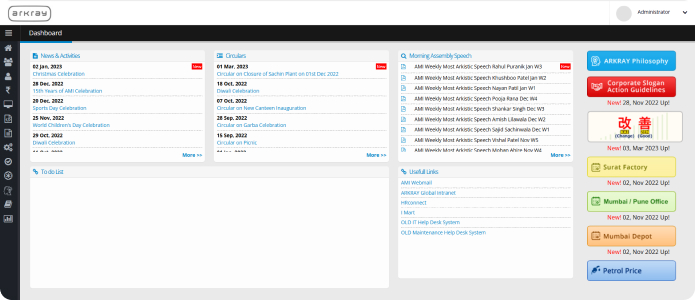
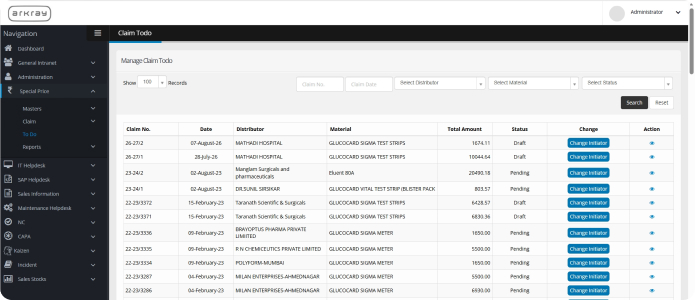
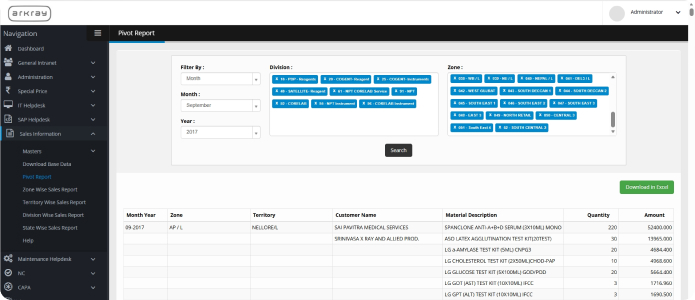
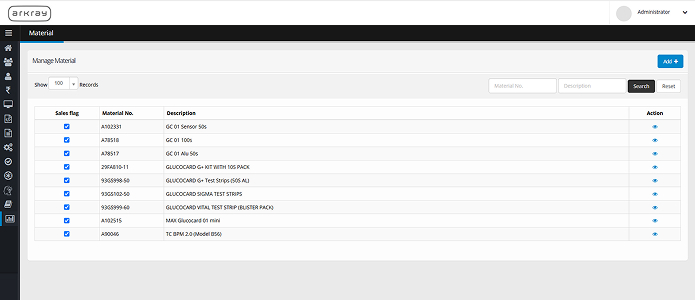
A short tour of the screens the programme runs on, from raising an idea through to reconciling the reward.

What changed
The approval path moved off paper, and into view
Ideas are raised, routed, reviewed, and approved in one place, each step recorded against a named role. No form travels between desks, nobody has to ask where a submission currently sits, and a stalled Kaizen is obvious rather than discovered a month later. The client reports approval turnaround came down once the queue was visible.
One set of numbers across every department
Department-wise and employee-wise metrics come from the same system instead of from spreadsheets each department maintained separately, so a monthly review starts from an agreed picture rather than a reconciliation.
Reward closure joined back up with approval
Paid and unpaid status sits on the Kaizen it belongs to. HR and finance reconcile from the record rather than reconstructing it from two places.
How it was built
Built on CodeIgniter for modular scalability, and deployed for enterprise-wide use across departments.
Other systems we have built near this one
Is your improvement programme still running on forms?
Suggestion schemes, safety observations, quality non-conformances, CAPA - they are all the same shape of problem: something one person raises that has to travel through several others before anything happens. Tell us how yours runs today and we will tell you honestly what it would take to change.