


Seven days of design,in twenty minutes.
How a transformer design platform replaced five to seven days of expert engineering with a run of ten to twenty minutes - more than fourteen thousand engineering formulas, several hundred thousand optimisation iterations, and a design that balances electrical performance, material cost, and manufacturability together rather than one against another by hand.
The situation
A transformer design is not one calculation. It is a negotiation between six or seven that pull against each other: electrical performance against material cost, losses against copper, tank dimensions against cooling, compliance with IS and IEC standards against manufacturability, and all of it against the price a customer will accept. An experienced design engineer holds that whole shape in their head and works it through by hand.
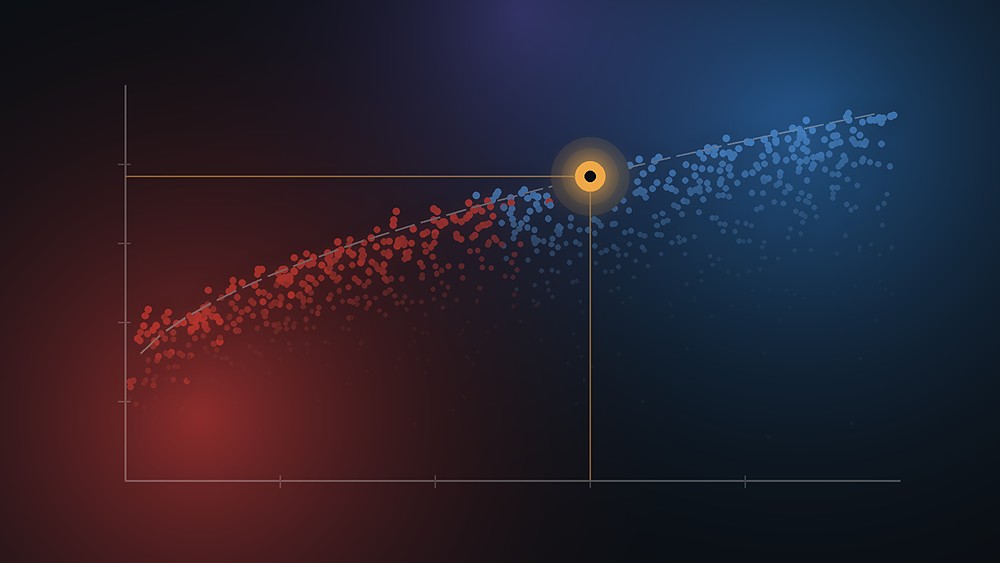
That takes five to seven days for a single optimised design, and it produces one answer. The engineer explores the handful of iterations there is time for, not the hundreds of thousands it would take to actually locate the best cost-performance combination. So the design is sound but rarely optimal, the quotation is slow, and the capability rests on a small number of people who cannot be replaced quickly.
An expert can evaluate a handful of iterations. Finding the best cost-performance combination takes hundreds of thousands.
What we built
Trafosys is a design automation and optimisation platform for transformer manufacturers. Its engine carries more than fourteen thousand scientific and engineering formulas - electrical, thermal, magnetic and mechanical calculations, loss and efficiency validation, and the manufacturing constraints and standards checks that decide whether a design can actually be built. A design master holds the manufacturer’s own voltage and rating definitions, material specifications, loss and cooling configuration and production limits, so what the platform generates follows company engineering practice rather than a generic template.
An engineer enters the specification - voltage parameters, winding configuration, cooling type, material options - and the platform then does the thing a person cannot. It runs somewhere between six hundred thousand and eight hundred thousand intelligent iterations, optimising copper utilisation, core material, weight, efficiency, losses, tank dimensions and manufacturing cost together rather than one at a time, and returns an optimised design in ten to twenty minutes. Engineers and management can compare optimised scenarios side by side instead of committing to the first workable answer anyone found.
Inside the platform
The engine
- More than 14,000 scientific and engineering formulas
- Electrical, thermal, magnetic, and mechanical calculation
- Loss and efficiency validation against every candidate design
- Roughly 0.6 to 0.8 million optimisation iterations per run
- Cost, weight, material, and manufacturability optimised together
- Design recommendations to compare, not a single fixed answer
Standards, materials, and control
- Design master holding voltage, rating, loss, and cooling configuration
- Company engineering standards applied to every design generated
- Core, winding, and insulation materials with costing and vendor parameters
- Tank dimensions and manufacturing limits enforced as hard constraints
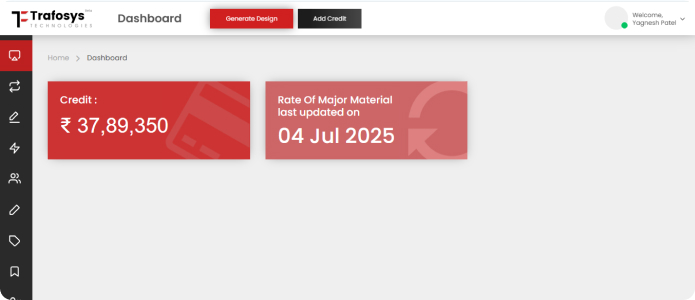
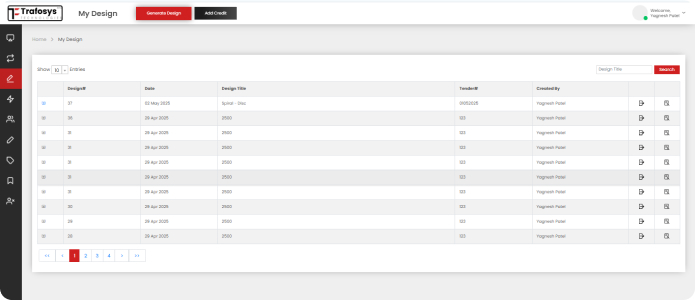
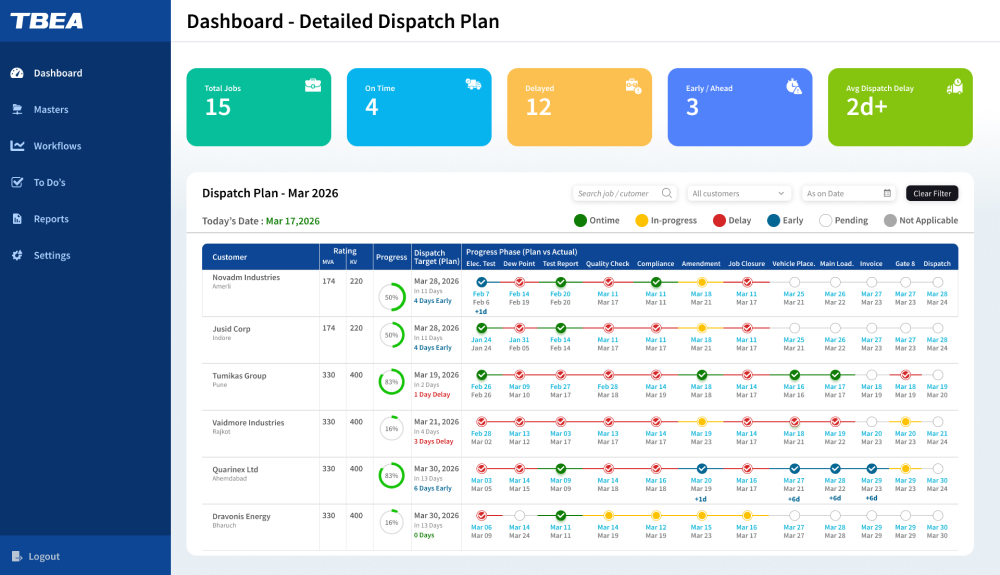
- Dashboards for design activity, cost analysis, and optimisation outcomes
- Role-based access, engineering approval workflow, and audit tracking
What it looks like

What changed
A week of engineering became a coffee break
The client reports design preparation falling from five to seven days to roughly ten to twenty minutes - a reduction of more than 90%, and enough to change what a manufacturer can respond to at all. A tender that was not worth pricing becomes one that is.
The design got better, not only faster
Because the platform evaluates hundreds of thousands of combinations rather than the handful a person has time for, it reaches cost-performance balances manual iteration would not find. Speed is the visible result. The optimisation is the valuable one.
The expertise stopped living in one head
Design knowledge that sat with a few senior engineers is captured as rules and standards inside the platform. Output is consistent between engineers, and the business can take on more design volume without hiring in proportion to it.
Other systems we have built near this one
Where does your business still depend on one person’s judgement?
Design calculation, estimation, configuration, pricing - the work that takes days because somebody experienced has to sit down with it. Tell us what yours looks like and we will tell you honestly whether it can be encoded, and what that would take.